Choose raised beds when you need greater control over the root zone or easier access, and choose in-ground growing when the existing soil is workable and you want a simpler lower-cost setup. Neither method is automatically better for every garden.
TL;DR: Raised beds give you more control over the root-zone soil, drainage, access, and bed shape, while in-ground gardens use existing soil and usually need less imported material. The better choice depends on your native soil, drainage, budget, mobility needs, climate, and how intensively you want to manage water and fertility.
The Main Difference Is the Root Zone You Control
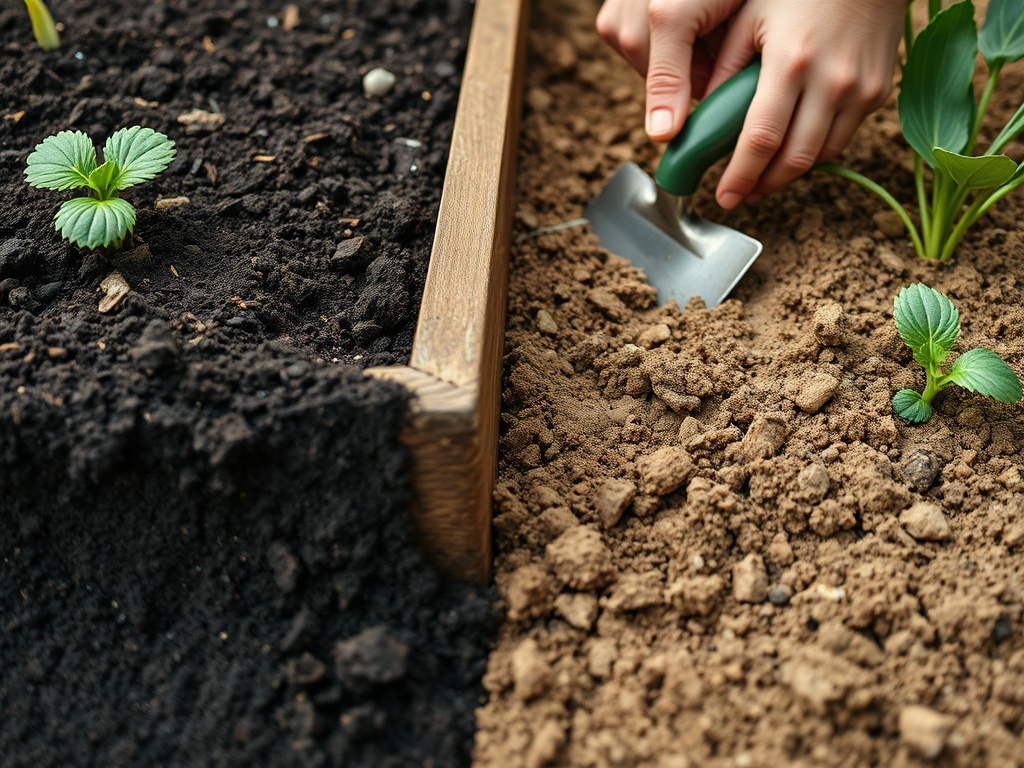
An in-ground garden asks you to work with the soil already on the site. You can improve it with organic matter, pH correction, mulching, and careful cultivation, but its texture, drainage profile, subsoil, stones, and compaction remain part of the system. A raised bed creates a distinct growing zone above the surrounding grade, which lets you choose or blend the fill material more deliberately.
Utah State University Extension’s raised-bed guidance notes benefits such as reduced compaction because the bed is not walked on, easier access, and the ability to use compost-enriched topsoil or a soilless mix. Those benefits are real, but they come with extra construction, fill, irrigation, and ongoing soil-management decisions.
Raised Bed Soil vs In-Ground Soil at a Glance
| Factor | Raised bed | In-ground garden |
|---|---|---|
| Starting soil | Imported or blended root-zone mix | Existing site soil improved as needed |
| Drainage | Often faster if the mix and site drain well | Depends heavily on native texture and grade |
| Spring warming | Often warms earlier | Usually changes temperature more gradually |
| Summer drying | Can dry faster, especially shallow beds | May retain moisture longer depending on soil |
| Compaction | Low if nobody steps into beds | Can increase with traffic and working wet soil |
| Initial cost | Higher if framing and fill are purchased | Often lower when existing soil is usable |
| Accessibility | Can be built higher for easier reach | Usually requires bending or kneeling |
Drainage Changes Faster Than Many Beginners Expect
Raised beds often drain more freely because the root zone sits above the surrounding grade, but they are not automatically immune to drainage problems. A dense mix, blocked outlet, compacted base, or bed placed in a low spot can still stay wet. In-ground beds can perform well when the native soil has good structure and surface water is directed away, but heavy clay or a high water table may require a different strategy.
Do not add a gravel layer simply because a bed is raised. Instead, use a well-structured soil mix, make sure water can leave the bed, and confirm that the location itself is not a drainage trap. When the underlying soil is suitable, loosening or blending the interface between imported mix and native soil can give roots a more continuous profile.
Temperature and Moisture Behave Differently Above Grade
Raised bed soil can warm earlier in spring, which may help with early planting in cool climates. The same exposure can mean faster drying during hot, windy weather. Shallow beds and containers generally have less moisture buffer than deep in-ground soil. That is why convenient irrigation matters more as the root zone becomes smaller or more exposed.
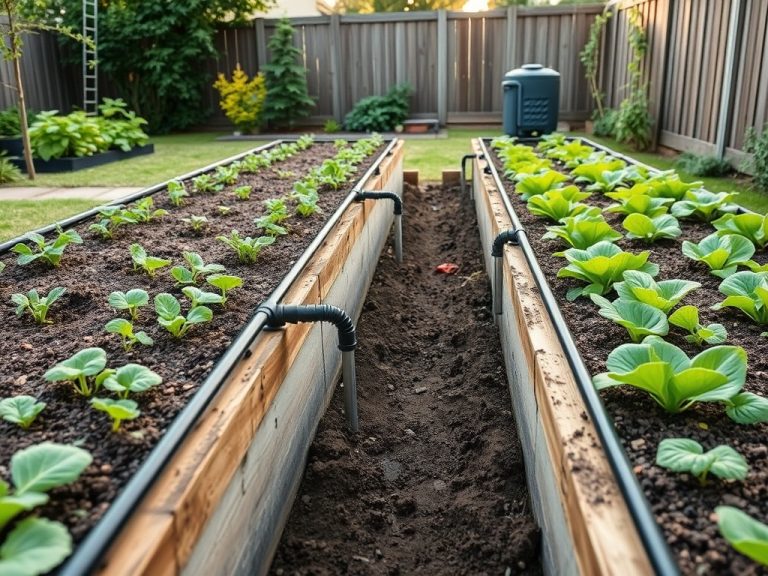
If raised beds are your choice, How to Set Up a Basic Drip System for Raised Beds explains how to put water close to plant roots without wetting the entire surrounding area. Drip does not remove the need to check soil moisture; emitter spacing, flow, soil texture, plant size, and weather still determine how long and how often the system should run.
Fertility Is Easier to Change but Also Easier to Overdo
Because raised beds hold a relatively small volume of soil, gardeners can change pH, organic matter, and nutrient levels more quickly than they could across a large native-soil garden. That can be useful when site soil is poor. It also means repeated additions of compost or fertilizer can build nutrients to excessive levels.
A soil test is useful for both systems, and raised beds should be sampled from the actual bed rather than from the paths between beds. Treat test results as a way to target amendments, not as a reason to keep adding material every season. Good soil management is about balance, structure, and appropriate nutrient levels, not maximum fertility.
Root Depth and Bed Depth Need to Match the Crop
A raised bed does not need to be extremely deep for every crop. If the native soil underneath is safe, well drained, and loosened, roots may extend beyond the imported mix. Where the underlying soil is compacted, contaminated, or otherwise unsuitable, depth and physical separation become more important. The correct design depends on why the bed is raised in the first place.
In-ground gardens usually offer a larger continuous soil volume, which can buffer moisture and temperature. Deep-rooted crops may benefit when the subsoil is open enough for roots to explore. Before digging or amending, identify buried utilities and avoid working wet soil, which can damage structure and create persistent compaction.
Cost and Labor Are Front-Loaded in Different Ways
Raised beds can require lumber, masonry, fasteners, soil mix, irrigation parts, and delivery fees. They also concentrate labor at setup. Once established, well-designed beds can be comfortable to weed, harvest, and manage. In-ground beds may be cheaper to start if the soil is already suitable, but improving poor structure over time can take repeated additions of organic matter and careful traffic management.
Think about replacement as well as installation. Wood frames eventually weather, hardware can loosen, and soil settles. Unframed mounded beds reduce some material cost. In-ground beds need edging only if the design calls for it, so they can be simpler where a permanent raised structure is unnecessary.
Weeds and Pests Do Not Disappear in Raised Beds
Fresh fill may start with fewer weed seeds, and defined beds make hand weeding easier, but windblown seed, compost, birds, and surrounding vegetation can introduce weeds over time. Raised beds also remain accessible to aphids, mites, whiteflies, caterpillars, slugs, and other pests. Physical barriers may be easier to mount on a framed bed, but monitoring is still essential.
For small soft-bodied pests, How to Stop Aphids, Mites, and Whiteflies Naturally uses an integrated approach that begins with identification and nonchemical controls before moving to labeled lower-risk products if needed. That method works in either soil system.
A Quick Decision Framework
- Choose raised beds when existing soil is severely compacted or difficult to improve, better accessibility is a priority, you want a defined intensive-growing area, or you need tighter control over the root-zone mix.
- Choose in-ground beds when native soil is workable, the site drains reasonably well, you want lower startup cost, or you are cultivating a larger area where importing fill would be impractical.
- Use both when the property has mixed conditions. Raised beds can handle intensive vegetables near the house, while in-ground beds can support larger ornamental or perennial areas.
Neither system is inherently superior. The best one reduces the biggest constraint on your site while staying within the time, water, and maintenance you can realistically provide.
Information note: This home and garden information is educational only. Conditions vary by climate, property, materials, and local rules; use a qualified professional when a task is outside your experience or involves safety-critical work.
Compare your native soil, drainage, access needs, and startup budget before deciding which bed system solves the most important problem.