Reduce garden plastic by preventing new single-use purchases first, then extending the life of durable items already in service. Replacement choices should consider longevity, plant health, repairability, and local recycling or composting options.
TL;DR: Cutting plastic use in gardening is usually a transition rather than a one-time purge. Keep durable plastic items in service, stop buying avoidable single-use products, choose reusable or lower-plastic alternatives when replacements are needed, and check local recycling rules before assuming pots, bags, or films belong in curbside recycling.
Begin With a Plastic Audit Not a Bin Bag
Walk through your shed, greenhouse, patio, and planting areas and list where plastic appears: nursery pots, seed trays, labels, compost bags, fertilizer containers, weed-control fabric, irrigation tubing, netting, fleece, buckets, watering cans, gloves, furniture, and storage boxes. The goal is to see which items are disposable, which are durable, and which solve a problem that would be hard to replace.
The Royal Horticultural Society’s plastic-free gardening guidance recommends reducing use and considering materials such as wood, paper, and coir where suitable. The most practical first step is not throwing away functional plastic. Keeping a durable item in service usually avoids creating immediate replacement waste.
Use the Hierarchy: Refuse Reduce Reuse Then Recycle
Refuse an unnecessary item when there is a workable alternative. Reduce the number of new plastic products you buy. Reuse what you already own until it is no longer safe or functional. Recycle only through an accepted local stream. This order matters because recycling is not available for every plastic format, especially films, mixed-material products, dirty pots, and degraded garden plastics.
Buy Plants With Packaging in Mind
Ask nurseries whether pots can be returned, reused, or recycled through a take-back program. Choose bare-root plants when horticulturally appropriate and in season. For seeds and propagation, reuse sturdy trays and pots rather than treating them as single-use. Newspaper pots, fiber pots, wooden modules, or soil blocks can work for some crops, but they have different durability, water use, and cost.
Do not choose an alternative purely because it is marketed as biodegradable. Check what conditions are required for breakdown and whether the material is accepted by your local composting system. A product that only breaks down in industrial composting may not behave the same way in a home compost pile.
Make Existing Pots Last Longer
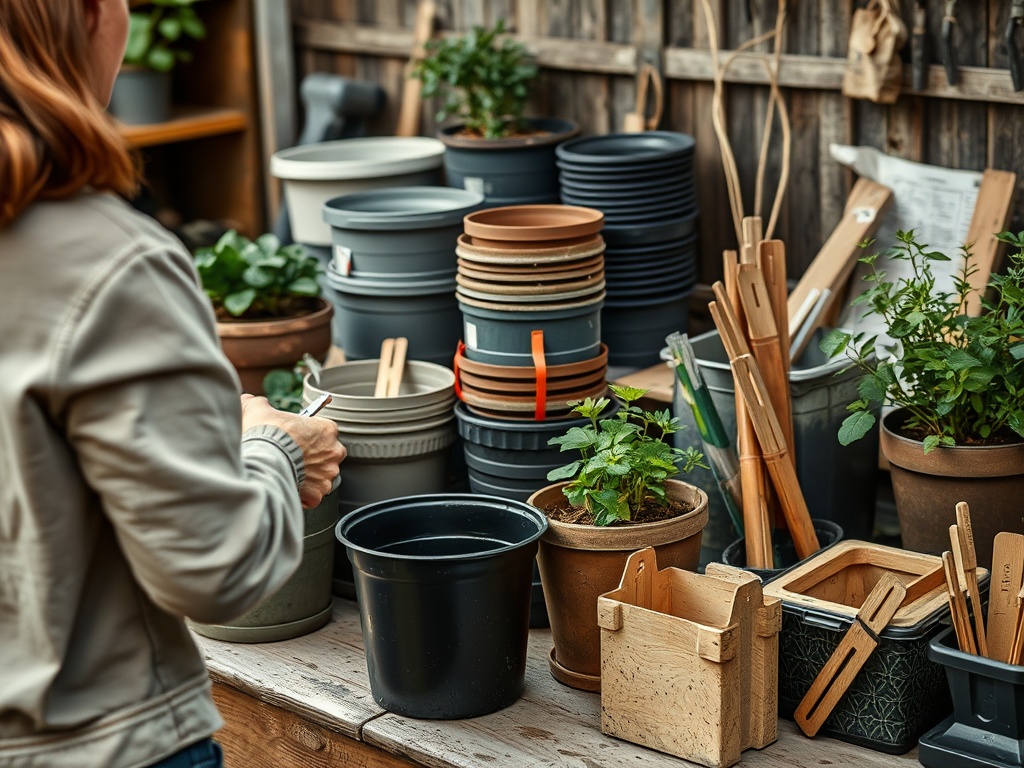
Sort pots by size, stack them out of direct sun, and avoid leaving brittle plastic where it will be stepped on or crushed. Clean containers before reusing them when plant disease has been a concern. If a pot is cracked but still stable, it may serve as a temporary outer pot or storage container rather than being discarded immediately.
Replace Labels and Ties With Reusable Options
Plant labels are easy to lose and easy to overbuy. Reusable metal labels, wooden markers for short-term use, pencil on appropriate weather-resistant surfaces, or a simple garden map can reduce the number of plastic tags entering the garden. For tying plants, choose durable soft ties that can be loosened and reused rather than thin disposable ties that may girdle stems if forgotten.
Question Plastic Weed Barriers Before Installing Them
Plastic sheet and some woven fabrics can suppress weeds temporarily, but they can also fragment, become difficult to remove, interfere with soil work, or create disposal problems later. In many ornamental beds, mulch, dense planting, hand weeding, or repeated shallow cultivation may be more maintainable. The best choice depends on the weed species, site use, climate, and whether the area will be replanted.
Reduce Packaging Around Soil Amendments
Where practical, buy compost, mulch, or soil in bulk from a reputable local supplier rather than in many small plastic bags. Bulk delivery is not automatically the lowest-impact choice if you need only a small amount or if transport distance is excessive, so match the purchase to the project. Home composting can also reduce bagged-material demand when the finished compost is suitable for the intended use.
Good soil planning can prevent overbuying. The comparison in Raised Bed Soil vs In-Ground Soil: What Changes? explains why raised beds often require more imported material at startup, while in-ground beds may rely more heavily on existing soil and targeted amendments.
Keep Durable Irrigation Plastic in Service
Drip tubing is plastic, but a durable irrigation system can still support water efficiency and may stay in service for years when protected and maintained. Replacing a functional system merely to eliminate plastic can create more waste. Instead, repair leaks, protect tubing from damage, flush lines, and replace only failed sections.
If you are installing new irrigation, How to Set Up a Basic Drip System for Raised Beds emphasizes an accessible layout that can be inspected and repaired. Serviceability is an important sustainability feature because it extends useful life.
Choose Tools for Repairability and Long Service
A plastic handle is not automatically a poor environmental choice if the tool is robust, comfortable, repairable, and used for many years. Compare replacement parts, fasteners, blade availability, and warranty support. A long-lasting mixed-material tool can be preferable to a nominally plastic-free item that fails quickly.
Recycle According to Local Rules
Do not place pots, bags, irrigation tubing, weed fabric, or plant labels in curbside recycling unless your local program specifically accepts them. Resin type, color, soil contamination, shape, and local sorting equipment affect acceptance. Nursery take-back programs can sometimes handle items that municipal systems do not.
The RHS also recommends reducing, reusing, and recycling as part of greener gardening. Treat any general recycling advice as a principle rather than a guarantee that a specific item is recyclable where you live.
Make the Transition at Replacement Points
A realistic low-plastic garden often changes one purchase at a time. When a seed tray fails, compare reusable alternatives. When buying plants, ask about returnable pots. When a bagged amendment runs out, consider bulk supply. When labels disappear, switch to a system you can reuse. These replacement points reduce waste without discarding serviceable equipment prematurely.
A Lower-Plastic Garden Still Has to Work
Sustainability choices should remain practical for plant health, safety, water use, and your physical ability. Avoiding plastic at any cost can create trade-offs in durability, hygiene, irrigation, or crop protection. Focus on the largest avoidable sources, extend the life of what you own, and make purchasing decisions that are easy to maintain over many seasons.
Information note: This home and garden information is educational only. Conditions vary by climate, property, materials, and local rules; use a qualified professional when a task is outside your experience or involves safety-critical work.
Choose one high-waste category in your garden and change the next purchase rather than discarding everything you already own.