
Owners decide between parking structure repair and replacement by comparing safety, deterioration pattern, remaining service expectations, code and accessibility needs, user disruption, and life-cycle value. A repair is sensible when defects are limited and controllable; replacement becomes more likely when the structure no longer supports the owner's operational or risk requirements.
Owner decision takeaway: Do not frame the choice as repair cost versus replacement cost alone. The better question is which option can provide safe, inspectable, usable service with acceptable risk over the owner's planning horizon.
The repair-or-replace question starts with risk
Parking structures deteriorate differently from enclosed buildings because they are exposed to water, deicing salts, vehicle loads, vibration, exhaust, freeze-thaw cycles, and frequent movement. A small crack at the surface may be a routine maintenance issue, or it may be the visible edge of corrosion, leakage, failed protection systems, or overloaded details. The American Concrete Institute parking structure maintenance guide notes that owners and consultants need preventive maintenance programs covering structural, operational, aesthetic, and routine concerns, which makes ACI's parking structure guide a logical reference when building an assessment scope.
Risk also includes people and business interruption. Falling concrete, exposed reinforcement, ponding water, failed barriers, poor lighting, and unclear traffic flow can affect users before the asset is technically beyond repair. For owners with mixed portfolios, parking decisions should connect to broader maintenance documentation, not sit in a one-off spreadsheet. That is why the condition record should tie back to good maintenance documentation during audits and to the asset register.
Compare the options before choosing a capital path
The practical choices are usually targeted repair, phased rehabilitation, or replacement. Targeted repair addresses limited defects. Phased rehabilitation can extend service while keeping parts of the facility open. Replacement resets the asset but brings larger disruption, permitting, design, financing, demolition, and temporary parking questions. None of these paths is automatically best. Each should be tested against structural condition, water management, reinforcement corrosion, user safety, and owner objectives.
Repair, rehabilitation, or replacement: owner comparison
| Path | Best fit | Risks to test before approval |
|---|---|---|
| Targeted repair | Localized cracks, spalls, joint failures, or coating defects with limited structural impact. | Hidden corrosion, recurring leakage, and poor access can expand scope. |
| Phased rehabilitation | Widespread but manageable deterioration where service must continue. | Traffic phasing, user safety, and temporary protection need strong planning. |
| Replacement | Systemic structural, functional, or code-related limitations that make repair impractical. | Capital approval, demolition risk, and alternate parking plans need early review. |
Corrosion deserves special attention because it can be hidden until damage becomes visible. Federal Highway Administration research on corrosion control discusses how durability planning and corrosion resistance influence the service needs of reinforced concrete infrastructure, and those principles are relevant when consultants evaluate chloride exposure, protection systems, and repair strategy in parking facilities through FHWA corrosion-control guidance.
What condition assessments should answer
A useful assessment does not simply list defects. It answers business and safety questions: where is deterioration located, is it active or historic, how fast is it progressing, what elements carry structural demand, and which repairs are urgent versus deferrable? The scope may include visual review, sounding, cover measurements, chloride testing, corrosion evaluation, waterproofing review, joint inspection, drainage review, and review of previous repair records. The exact methods should be selected by qualified professionals based on structure type and observed conditions.
Visible distress is only the starting point
Spalls, cracks, delamination, ponding, exposed reinforcement, rust staining, failed traffic coatings, leaking joints, and displaced barriers are useful clues. They do not, by themselves, prove the best capital path. Owners should ask whether defects are isolated or repeated across similar bays, whether previous repairs are failing, and whether the protection strategy still matches the exposure. A garage with many repeated defects may need a rehabilitation strategy even if each individual repair looks small.
User disruption belongs in the decision
Repair can be less disruptive than replacement, but not always. A heavily used downtown garage may need complex phasing, temporary striping, pedestrian routing, noise control, dust control, and night work coordination. Replacement may look expensive but could remove years of recurring closures. This is especially relevant when facility teams also depend on connected systems, such as lighting controls, gate equipment, drainage pumps, and building automation support for maintenance teams.
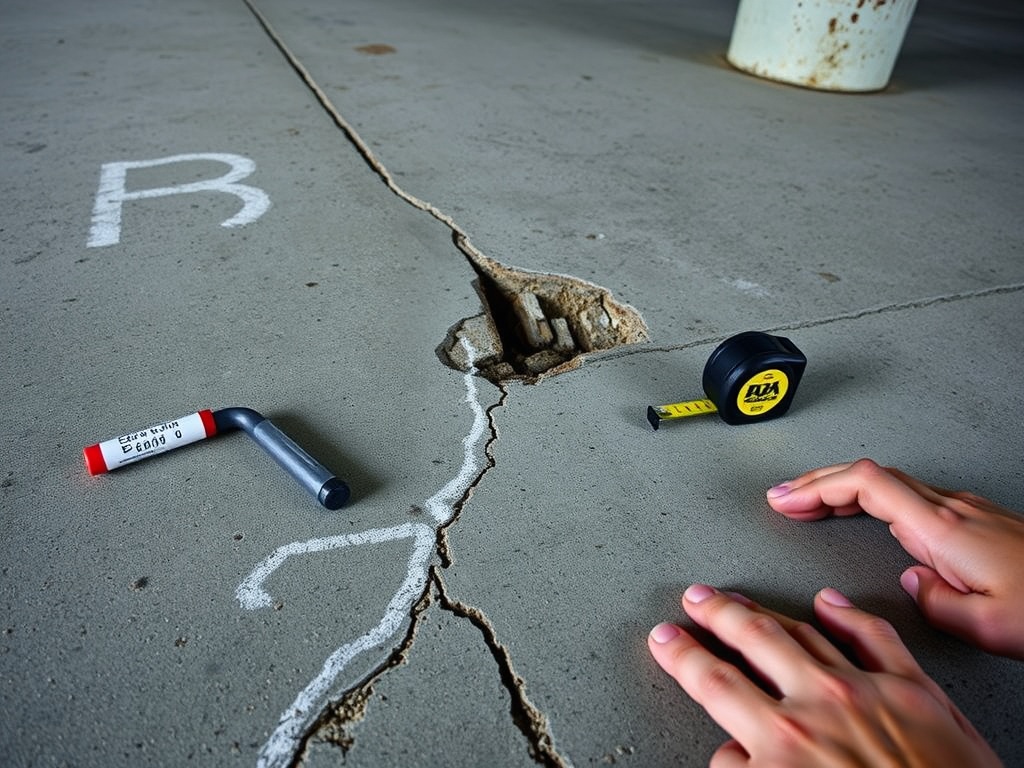
Owner review checklist for parking assets
Before approving a repair or replacement recommendation, owners should ask:
- Has a qualified structural professional reviewed the distress pattern and safety implications?
- Are defects mapped by level, bay, element, and severity?
- Are water, chloride, drainage, and joint issues being addressed, not just patched over?
- Does the recommendation include near-term safety actions and longer-term maintenance needs?
- Are user access, temporary parking, signage, lighting, and security addressed during work?
- Does the financial review separate urgent stabilization, planned rehabilitation, and optional upgrades?
- Are as-built records, previous repairs, warranties, and inspection reports stored in the owner's system?
- Will the chosen approach update the asset hierarchy and naming rules, especially where systems feed asset naming conventions across systems?
How funding and phasing shape the recommendation
Funding method can influence the practical decision, but it should not distort the condition assessment. Operating funds may cover small repairs, while capital budgets may be needed for rehabilitation or replacement. Owners should avoid splitting one connected deterioration problem into several small repairs simply because each package is easier to approve. That approach can leave water, corrosion, or traffic coating problems unresolved.
Phasing is just as important. A repair strategy that closes too much capacity during peak use may create safety and revenue problems. A replacement strategy that ignores temporary parking, pedestrian routes, lighting, and security may be technically sound but operationally weak. The owner's decision package should include the engineering rationale, service plan, communication plan, inspection hold points, and record updates. That makes the recommendation easier to review by finance, operations, risk, and maintenance teams at the same time.
Owners should also separate safety-driven work from preference-driven upgrades. Lighting, payment systems, wayfinding, security cameras, and user amenities may be bundled with a garage project, but they should not hide the structural reasoning. Keep the decision record clear so urgent repairs, functional improvements, and optional enhancements can be approved on their own merits.
Choose the path that preserves safe service
The best decision is the one that preserves safe service while matching the owner's tolerance for disruption, future maintenance, and capital risk. For some garages, that means a focused repair package with better drainage and inspections. For others, repeated deterioration, functional limits, or compliance needs may point toward replacement. Use this article for educational planning only; parking structure decisions require qualified structural, code, legal, and project advice for the specific asset and jurisdiction.