
Comparing baby-friendly vs teen-friendly resorts is less about which property has more family amenities and more about which property removes the right kinds of friction. Babies change sleep, feeding, transport, and water-safety needs; teens often care more about independence, connectivity, sports, evening activities, and spaces that do not feel designed for small children.
If your family includes both age groups, compare the property as a daily operating system. The question is not simply “Does it have a kids club?” but which ages the club accepts, when it runs, what requires reservations, and whether parents can realistically coordinate different schedules.
Family-fit snapshot: babies and teens need different infrastructure
- Baby-friendly resorts reduce caregiver friction through room, feeding, sleep, transport, and supervision support; teen-friendly resorts succeed when older children have safe independence, age-appropriate activities, and social space.
- Compare the exact age rules and operating hours for kids clubs, pools, sports, evening programs, dining, and room occupancy.
- A property can work for both age groups, but only if its layout and schedule cover the family’s youngest and oldest needs at the same time.
Compare the invisible work parents must do
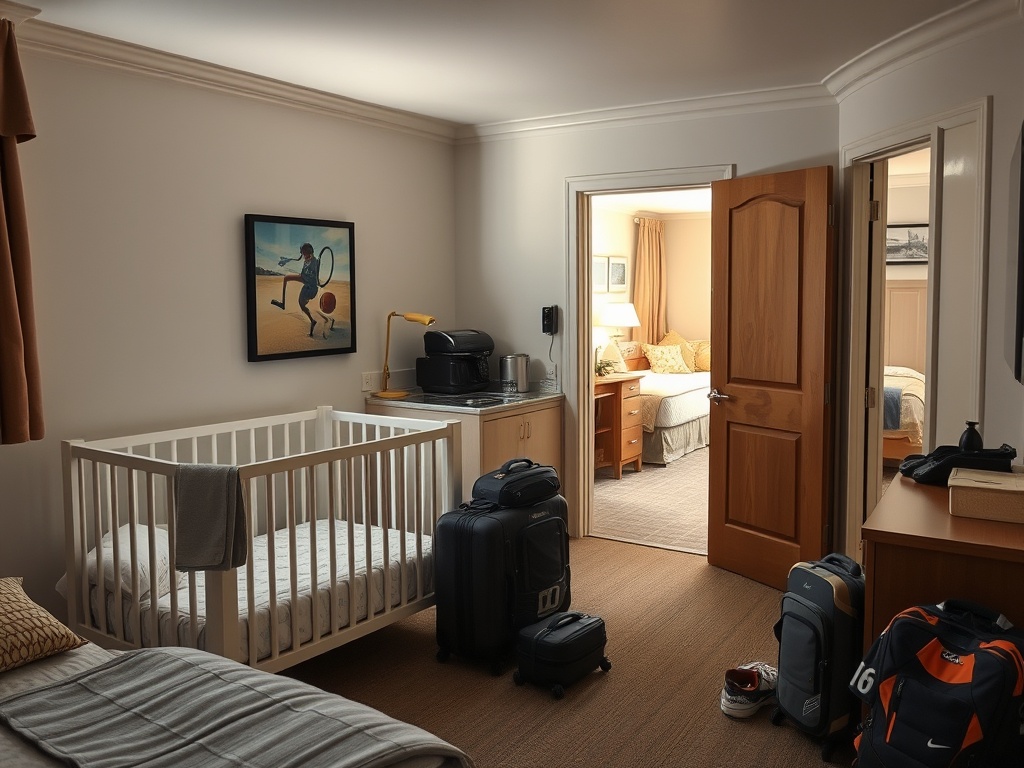
For babies and toddlers, inspect the room first. Confirm crib availability, refrigerator or food-storage options, kettle or bottle-preparation arrangements where relevant, blackout capability, bath setup, laundry access, stroller routes, elevator access, and the distance from the room to dining and pools. A long, steep walk can matter far more with a sleeping child than it does in a couple’s itinerary.
For teens, inspect freedom and boundaries. Look at age rules for the gym, water sports, teen clubs, evening activities, pools, and excursions. Check whether activities are structured every hour or whether there are flexible spaces for socializing. The goal is not maximum programming; it is an environment where older children can have age-appropriate autonomy without forcing the family to split logistics all day.
| Family need | Baby-friendly emphasis | Teen-friendly emphasis |
|---|---|---|
| Room setup | Sleep, feeding, bathing, stroller access | Space, privacy, charging, room proximity |
| Supervision | Babysitting, nursery-age care, parent proximity | Age-appropriate independence and clear activity rules |
| Recreation | Shallow or calm areas, simple parent-child activities | Sports, excursions, social spaces, later programming |
| Dining | Flexible timing, high chairs, simple food access | Choice, later hours, grab-and-go options |
| Main question | How much caregiver work does the property remove? | How much safe autonomy does the property allow? |
Price services by the age that will use them
Compare inclusions by age band. Some child programs begin only after a minimum age; babysitting may be separate from a kids club; teen activities may be included while premium sports or excursions are not. Room occupancy can also change the price sharply when a family needs a suite, connecting rooms, or an additional bed. Build the quote using the exact ages at travel, not a generic “two adults, two children” assumption.
For broader family travel preparation, the CDC’s current guidance for infants and children covers travel health, water safety, transportation restraints, and other risks that can affect trip planning. It is not a resort-rating system, but it is a useful reminder that room layout and recreation choices should be evaluated alongside the child’s age and planned activities.
If the family is still deciding between adult-oriented and multi-age properties, comparing adults-only and family beach resorts provides a wider resort-type comparison.
Test independence and supervision in the same plan
Now test a normal day. For a baby, mark wake-up, breakfast, nap, pool time, feeding, and bedtime. For a teen, mark preferred sports, pool or beach time, social programs, meals, and evening activities. Then overlay the resort’s published schedule. If every family member’s plan requires a different end of a very large property, the amenity list may be less useful than it first appears.
Room location can solve or create family friction. A room beside entertainment may be convenient for teens and difficult for an early bedtime; a remote quiet block may be peaceful for a baby and annoying for a teenager who wants frequent access to activities. The guide to comparing room views and locations helps turn that trade-off into a room-selection decision instead of leaving it to check-in.
Accessibility deserves the same specificity. In the United States, ADA lodging rules require reservation systems to identify accessible features with enough detail for guests to assess suitability. Families using strollers, mobility devices, or other access supports can apply the same verification habit anywhere: ask about the actual path, doorway, bathroom, elevator, and activity access rather than relying on a broad “accessible” label.
Look for age gaps hidden inside “family friendly”
Watch for a “family-friendly” description that does not publish age bands. A club that starts at age four does not solve childcare for a two-year-old; a teen lounge that closes early may not match older children’s expectations. Also check whether water activities require a certain swimming ability, size, or age, and whether an adult must participate.
Another red flag is a schedule that looks full but depends heavily on limited-capacity reservations. Ask when bookings open, whether families can reserve before arrival, what happens when activities fill, and whether alternatives exist. If the activity calendar drives the trip, comparing resort activity schedules offers a more detailed framework.
Verification notes to save before you book: baby-friendly vs teen-friendly resorts
Keep a simple record of the booking details that drove your decision: the exact room or accommodation category, occupancy, included services, cancellation deadline, and any written confirmation of a feature that is essential to the trip. Screens and property pages can change after booking, so saving the relevant terms gives you a clear reference if a question arises later.
When a comparison depends on a seasonal service, activity, shuttle, childcare program, or facility, verify it for your dates rather than relying on a general amenities page. If the property cannot confirm something that materially affects your decision, mark that item as uncertain in your scorecard instead of giving it full value.
Choose around the hardest age transition
Create two columns, “caregiver effort” and “child/teen independence.” Score the resort on sleep setup, feeding convenience, stroller movement, childcare, water safety, teen autonomy, sports, social spaces, evening options, room layout, and total cost. The best property for a mixed-age family often is not the one with the most facilities; it is the one that prevents one age group from consuming all of the adults’ logistical attention.
Before paying, confirm the exact age-based rules for the travel dates and save any written information that materially affects the decision. Programs can be seasonal or capacity-limited, so current operating details matter more than an old review or a generic list of family amenities.
Select the resort that balances the ages, not the brochure
Use the youngest traveler’s care needs and the oldest child’s independence needs as the two ends of your checklist. A resort that satisfies both usually creates a smoother family trip than one that excels for only a narrow age band.