
Identity-based habits work by making health behaviors part of how you see yourself, not just tasks you force yourself to complete. The shift is from “I must finish a program” to “I am someone who keeps small promises about movement, food, and recovery.”
TL;DR: Identity-based habits focus on repeatable evidence, not motivational slogans.
- Small actions matter when they are specific, visible, and repeated often.
- The goal is to build a health identity that survives busy weeks, travel, setbacks, and plateaus.
- This approach supports fitness change, but it does not replace medical care, nutrition guidance, or safe training progression.
Why identity matters after motivation fades
Most people can follow a plan when the schedule is easy and motivation is high. Long-term change is tested when life becomes inconvenient. Identity-based habits help because they reduce the need to renegotiate every behavior. A person who sees herself as “someone who trains twice a week” is more likely to do a shorter version on a busy day than abandon the week entirely.
This is not magic psychology. It is a practical way to make behavior easier to repeat. Public-health guidance still matters. The CDC notes that adults benefit from regular physical activity and muscle strengthening, but the behavior system determines whether those recommendations become normal life. Pairing identity with weekly exercise planning turns broad advice into a schedule you can actually use.
Build evidence before chasing belief
You do not need to believe you are a fit person before acting. You need small pieces of evidence. A 10-minute walk after dinner, a protein-rich breakfast, a bedtime routine, or two sets of squats can become evidence if repeated. The action should be small enough to complete on an imperfect day. Over time, the identity follows the evidence.
| Old goal-only statement | Identity-based version | Small proof |
|---|---|---|
| I need to lose weight | I am someone who prepares meals that support my energy | Pack lunch 3 days this week |
| I need to get fit | I am someone who moves even on busy days | Walk 10 minutes after work |
| I need discipline | I am someone who keeps recovery promises | Set a consistent sleep cutoff twice this week |
This also prevents all-or-nothing thinking. If the plan depends on a perfect hour-long workout, a busy day becomes failure. If the identity is “I do not skip the movement conversation with myself,” a 12-minute session still counts as evidence. For people frustrated by scale stalls, weight-loss troubleshooting can help separate identity from noisy outcomes.
Design habits with context, not willpower
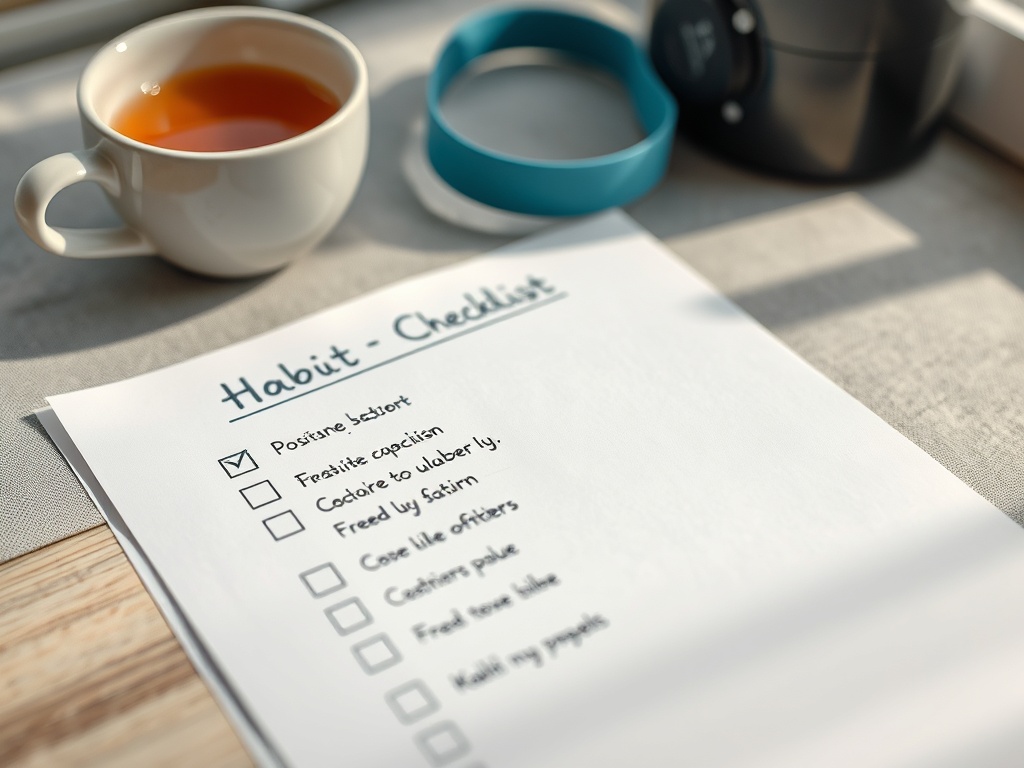
A habit needs a cue, an action, and a realistic reward. Put walking shoes near the door. Keep resistance bands where you can see them. Pair mobility with a morning beverage. Keep a default grocery list. These are simple environmental changes, but they reduce decision load. The less often you need to rely on motivation, the more stable the habit becomes.
The American Heart Association offers practical ideas for moving more and describes physical activity as something that can be built across daily life, not only formal workouts. Its activity recommendation page supports the idea that habit design can make activity more frequent and less intimidating.
Advanced readers still need flexible standards
High performers can misuse identity. “I am disciplined” can become “I never rest.” “I eat clean” can become anxiety around normal meals. A useful identity should support health, not shrink life. Better standards sound like: I train hard when planned, I recover when needed, I eat in a way that supports my goals, and I adjust when feedback changes.
- Use minimum versions for busy days, such as one set or a 10-minute walk.
- Track streaks only if they encourage you, not if they create guilt.
- Choose identities based on process, such as “consistent lifter,” not appearance.
- Let recovery count as part of the identity.
- Review habits monthly so they evolve with your life.
How to handle setbacks without restarting
A missed workout is not evidence that the identity failed. It is a cue to resume. The danger is the restart mindset, where every slip requires a new program, new diet, or new app. Instead, use a repair rule: never miss the next reasonable opportunity. If you skip Monday training, do a shorter Tuesday session. If dinner is chaotic, return to your planned breakfast.
Soreness, fatigue, and schedule overload can also interfere with identity. When that happens, use simple soreness-management strategies instead of proving commitment through pain. Identity should make health behavior more humane, not more rigid.
A 30-day identity experiment
Choose one identity sentence and one daily proof. For example: “I am someone who protects my mobility,” paired with 5 minutes of movement after waking. Or: “I am someone who fuels training,” paired with protein at breakfast. Track completion with a simple check mark. At the end of 30 days, ask whether the behavior felt easier, whether it supported your health, and what minimum version you can keep for the next month.
Long-term health change is built by repeated evidence. Start smaller than your ambition, make the cue obvious, and let your actions vote for the person you are becoming. When the identity supports consistency without shame, it becomes a durable tool rather than another short-lived challenge.
Turn identity into a weekly operating system
An identity becomes useful when it is attached to scheduling rules. For example, “I am someone who protects strength” becomes two planned lifting appointments. “I am someone who moves after meals” becomes a 10-minute walk after dinner on weekdays. Without a calendar, identity can become another inspirational phrase that fades when life gets noisy.
Use implementation language that is specific: after I close my laptop, I will walk for 10 minutes; after I brush my teeth, I will prepare workout clothes; after Sunday breakfast, I will choose three dinners. These statements reduce ambiguity. The brain does not need to decide what a healthy person would do; the next action is already defined.
Identity also needs permission to be human. A strong health identity includes repair. A missed session, restaurant meal, poor sleep night, or stressful week becomes information. It does not erase progress. The identity is proven by returning to the next reasonable action, not by maintaining perfection.
Review your identity sentence every month. If it feels inspiring but does not change behavior, make it smaller. If it creates pressure or shame, make it kinder. The best identity is not the most impressive one; it is the one that repeatedly points you toward a useful action.
Social support can strengthen identity when it is chosen carefully. Tell one supportive person what action you are practicing, not what body outcome you are chasing. A friend who asks about your evening walk or lifting appointment can reinforce the identity without turning progress into public pressure. Keep the support practical and low-drama.