
Mobility and independence can improve through simple daily movement when the routine supports strength, balance, flexibility, and endurance in small repeatable doses. The goal is not a complicated program; it is keeping everyday actions such as standing, reaching, walking, and carrying easier for longer.
TL;DR: Daily movement helps preserve the skills used in normal life: getting up, walking, climbing, reaching, and balancing.
- Short sessions can include sit-to-stands, heel raises, gentle walking, hip mobility, and balance practice.
- Progress should be gradual, stable, and adapted for pain, dizziness, joint issues, or fall risk.
- Older adults or people with health conditions should use professional guidance when safety is uncertain.
Mobility is more than stretching
Mobility means using joints through useful ranges with enough control to perform daily tasks. Flexibility matters, but so do strength, balance, coordination, and confidence. Someone may be able to stretch on the floor yet still struggle to rise from a chair. Another person may walk often but avoid stairs because leg strength and balance are declining.
The National Institute on Aging emphasizes that physical activity is important for healthy aging and provides resources for older adults, caregivers, and health professionals. Its exercise and older adults toolkit is a practical authority because it treats movement as part of independence, not only fitness.
The four-skill framework for independence
A simple routine should touch four skills: endurance for walking and daily energy, strength for standing and carrying, balance for stability, and flexibility for comfortable range of motion. These are also the categories commonly used in older-adult exercise education. The routine does not need to be long. It needs to be repeated and progressed carefully.
| Skill | Simple daily movement | Everyday benefit |
|---|---|---|
| Strength | Sit-to-stands, wall pushups, step-ups | Getting out of chairs, carrying groceries |
| Balance | Tandem stance near support, single-leg weight shifts | Reducing unsteadiness during turns |
| Flexibility | Gentle calf, hip, and chest mobility | Reaching, walking stride, posture comfort |
| Endurance | Easy walking or marching in place | Longer errands and less breathlessness |
For people who already exercise, weekly exercise frequency planning can help place mobility work without making the week feel crowded. If soreness or stiffness limits participation, simple soreness reduction methods may help separate ordinary training stiffness from warning signs.
A 10-minute daily movement sequence
Begin with 1 minute of easy marching or walking. Do 6 to 10 sit-to-stands from a stable chair. Hold a counter and perform 8 to 12 heel raises. Practice 20 to 30 seconds of tandem stance with support nearby. Finish with gentle hip circles, shoulder rolls, and calf stretching. The exact numbers should be adjusted to ability. The routine should feel useful, not risky.
The myth is that mobility requires an hour of yoga or a complex corrective system. Some people enjoy those options, but many people need simple exposure to the movements life requires. A few minutes daily can keep skills familiar. Progress may show up as easier stair climbing, steadier turns, more comfortable walking, or less hesitation when rising from the floor.
Safety boundaries matter
- Use a sturdy chair, wall, or counter for balance practice.
- Avoid holding your breath during effort.
- Stop if you feel chest pain, faintness, sudden weakness, or sharp joint pain.
- Progress range and repetitions before adding speed or unstable surfaces.
- Ask for professional support after falls, surgery, major dizziness, or unexplained pain.
Independence is personal. For one person it means gardening without fear. For another it means playing with grandchildren, carrying laundry, traveling, or living at home safely. The routine should be chosen for the tasks that matter most. That is why a generic “best mobility exercise” is less useful than a daily menu of movements matched to real life.
How to progress without making it complicated
Progress one small factor every 1 to 2 weeks. Add 2 sit-to-stands. Extend a walk by 3 minutes. Hold balance for 5 seconds longer. Use a slightly lower chair only if control is good. Add a light carry, such as a grocery bag, when walking is steady. These changes are measurable without turning movement into a performance test.
Wearables can help some people notice walking trends, but they should not replace body awareness or safety. If step goals create pressure or anxiety, using wearable data without dependence offers a calmer approach. The goal of daily movement is confidence in ordinary life, not a perfect number.
Small movement, large practical value
Choose 5 to 10 minutes of movement you can repeat most days. Tie it to an existing routine, such as after breakfast or before an evening shower. Keep support nearby and move with control. Over time, simple daily practice can make strength, balance, and mobility feel less like separate workouts and more like normal maintenance for independent living.
Make the routine fit the home and the body
A daily movement routine should match the environment. If the home has stairs, step practice may be useful. If the person lives in a small apartment, marching, sit-to-stands, and supported balance work may be enough. If outdoor walking is unsafe because of weather or surfaces, indoor walking routes can still help.
Pain history matters. Arthritic knees may prefer a higher chair for sit-to-stands. Shoulder discomfort may require wall slides instead of overhead reaching. Balance concerns may require a counter, rail, or caregiver nearby. Modifications are not failures; they are what make the practice repeatable.
Track practical wins rather than only exercise minutes. Can you rise from a chair with less help? Carry a laundry basket more confidently? Walk to the mailbox without stopping? Turn around without grabbing furniture? These outcomes connect movement to independence, which is more motivating than abstract fitness language.
If progress stalls, adjust the dose gently. Add a second short session, increase walking time by a few minutes, or add a light carry. Avoid sudden jumps to unstable surfaces, fast movements, or deep ranges that create fear. Confidence grows when challenge is clear and safety is respected.
Caregivers and family members can help by making movement easier rather than taking over every task. Leaving a clear walking path, placing a sturdy chair in the right spot, or joining a short walk can support independence. The aim is not to remove all challenge. The aim is to create a safe amount of challenge that the person can practice regularly.
Consistency is more valuable than intensity for many mobility goals. Five controlled minutes daily can maintain confidence better than a long session done once and forgotten. When movement is tied to regular cues such as meals, medication schedules, or TV breaks, it becomes part of daily living instead of another appointment to remember.
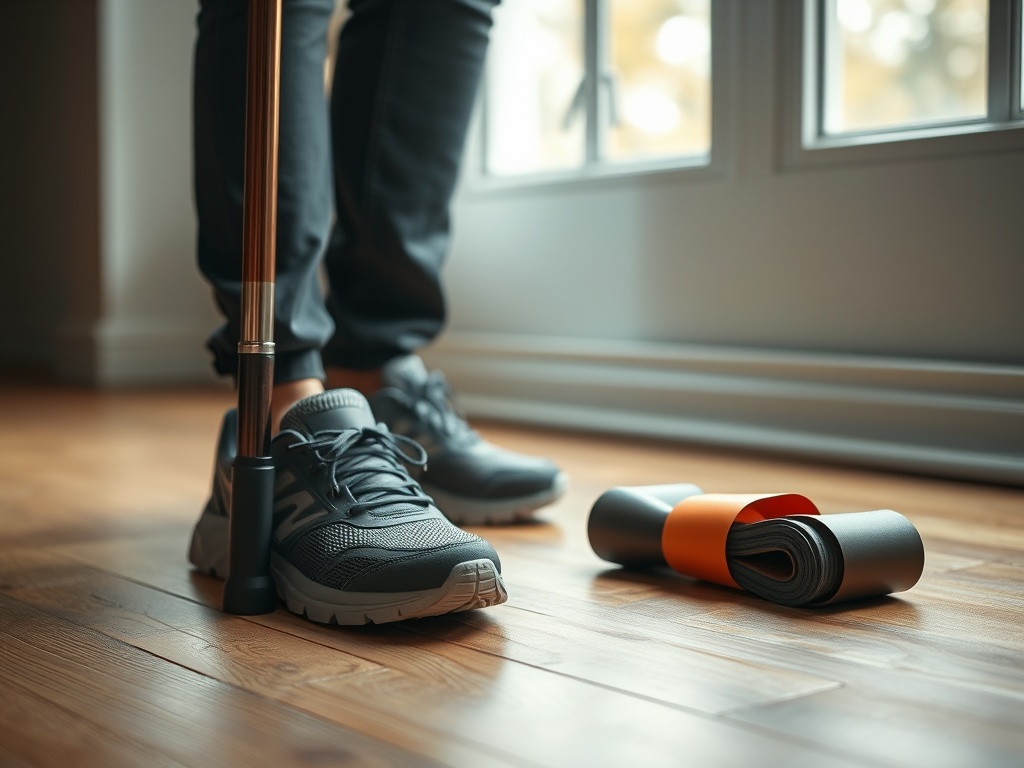
Keep the daily routine visible. A chair, band, or walking shoes placed in the same spot can act as a reminder without another app, alarm, or checklist system during a busy week.