
Women can build muscle without extreme dieting by combining progressive strength training, enough food, sufficient protein, and recovery that supports performance. The goal is not to shrink the body into a program; it is to give the body a clear reason and enough resources to get stronger.
TL;DR: Muscle building requires resistance training that progresses over time and nutrition that supports recovery.
- Extreme calorie restriction usually works against strength, energy, and consistency.
- Protein matters, but so do carbohydrates, fats, micronutrients, sleep, and realistic training volume.
- Women do not need a separate set of “toning” rules; they need smart loading, recovery, and patience.
Replace restriction with training support
Many women are told to diet harder when their actual goal is to look, feel, or perform stronger. Severe restriction can reduce training energy, increase fatigue, and make consistency harder. Building muscle usually requires a different mindset: train with enough challenge, eat enough to recover, and track performance instead of chasing constant scale drops.
The foundation is progressive resistance training. Public-health guidance recommends muscle-strengthening activity at least 2 days per week for adults, and the CDC adult activity guidance makes that baseline clear. Muscle-building goals may require more structured work than the minimum, but the minimum shows that strength training is not optional decoration. It is part of health.
Use real strength progress, not “toning” confusion
The word toning often hides two goals: building muscle and changing body composition. Muscle grows when it receives enough tension and repeated challenge. That can happen with barbells, dumbbells, machines, cables, bands, or bodyweight variations. The tool matters less than the quality of the stimulus and the ability to progress safely.
A practical plan might include 3 strength days per week with squat or leg-press patterns, hip hinges, pushes, pulls, carries, and core work. The exact exercises depend on experience, equipment, and injury history. For load selection, choosing the right weight for strength workouts can help avoid the common mistake of using weights that are either too light to challenge muscle or too heavy to control.
Food should support the work
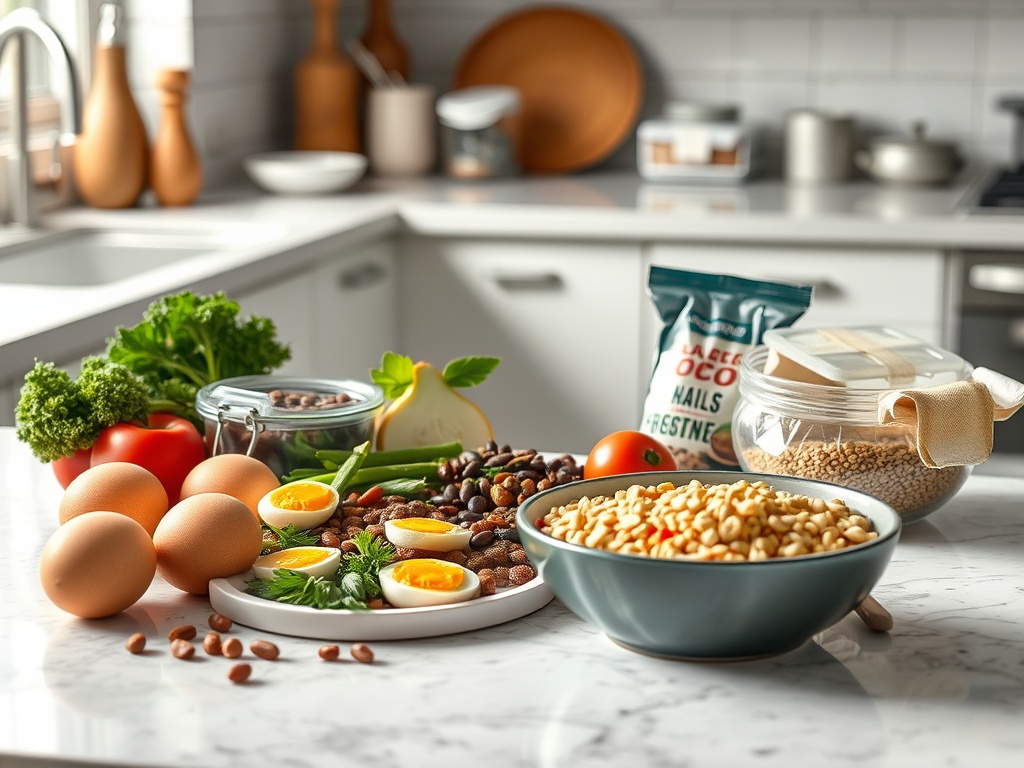
Protein supports muscle repair, but it is only one part of the plan. Carbohydrates help fuel training, dietary fats support overall nutrition, and vegetables, fruits, legumes, and whole grains support micronutrient and fiber intake. MedlinePlus explains the role of dietary proteins in growth and repair, but a muscle-building diet still needs balance.
| Need | Practical target behavior | Mistake to avoid |
|---|---|---|
| Progressive training | Add reps, load, sets, or control gradually | Changing workouts before progress can be measured |
| Protein | Include a protein source at meals | Relying only on shakes while meals stay inconsistent |
| Energy | Eat enough to train and recover | Cutting calories aggressively while expecting strength gains |
| Recovery | Sleep and schedule rest days | Treating exhaustion as proof of dedication |
Some women do well with a Mediterranean-style pattern plus planned protein at each meal. Others prefer a higher-protein structure. The comparison in Mediterranean diet versus high-protein diet can help choose the eating style that fits both health and training goals without turning food into a rigid identity.
Common myths that slow progress
- “Lifting heavy will automatically make women bulky.” Muscle gain is gradual and depends on training, food, genetics, and time.
- “More cardio is always better.” Cardio supports health, but excessive volume can compete with recovery if food and sleep are poor.
- “Soreness means growth.” Soreness may follow new stress, but it is not a precise muscle-building score.
- “A smaller body is always a fitter body.” Strength, energy, mobility, and health markers matter too.
This topic needs careful language. No single article can predict how a woman’s body will respond. Menstrual cycle symptoms, perimenopause, medication, pregnancy history, low energy availability, anemia, thyroid issues, injuries, and stress can all affect training and recovery. When symptoms are significant, professional medical or dietitian support is appropriate.
Progress markers that are not scale-only
Track reps, load, range of motion, workout consistency, energy, measurements, clothing fit, and recovery. A woman may gain strength while scale weight changes slowly, especially if muscle, water, and glycogen shift. Progress photos can help some people, but they can also become stressful. Choose metrics that promote useful behavior rather than body checking.
Recovery should be part of the plan, not a reaction to breakdown. If soreness keeps disrupting training, reducing muscle soreness without gadgets can help adjust volume, novelty, and recovery basics. If motivation rises and crashes, identity-based systems may keep the plan stable.
A sustainable muscle-building week
Start with 2 to 3 full-body strength sessions, 1 to 2 moderate cardio sessions, and daily light movement. Keep exercises stable for 6 to 8 weeks so progress can be measured. Eat regular meals with protein and enough total energy. Increase training stress slowly. The best plan is not the harshest one; it is the one that lets strength, confidence, and health move in the same direction.
How to progress without chasing extremes
Progressive overload does not always mean adding weight. It can mean one extra rep, a slower lowering phase, a fuller range of motion, another set, better stability, or more consistent weekly attendance. This matters because some women get stuck believing every session must be heavier or harder. Progress can be technical and repeatable.
A useful training log includes exercise, sets, reps, load, effort, and one note about energy. If loads are rising but energy is collapsing, the plan may be too aggressive. If energy is good but loads never change, the plan may need more challenge. The log helps separate body-image emotion from training evidence.
Cardio can stay in the plan, but it should support the goal. Moderate walking, cycling, swimming, or short endurance sessions can improve health and recovery. Very high cardio volume combined with low food intake can make muscle-building harder for some people. The right balance depends on the person, not on gender stereotypes.
The most sustainable approach is to eat enough to train, lift with purpose, and let body composition change gradually. If dieting history makes this difficult or stressful, professional support is worth considering. Muscle building should expand capability, not create a new set of food fears.
Strength training can also support confidence because progress is visible in performance. A first pushup variation, a heavier deadlift, more controlled lunges, or steadier carries are concrete wins. These outcomes often feel more stable than appearance goals because they depend on actions inside the program. That shift can make the process healthier and easier to sustain.
Clothing fit and body composition changes may lag behind strength improvements, especially in the first months. That is normal. Early progress often comes from better coordination, confidence, and technique before visible muscle change is obvious. Staying patient during this phase is easier when the plan tracks performance wins rather than only appearance feedback.
A simple rule is to leave the gym feeling trained, not punished.